


Search “liver supplement” and you will get 40 million results, half of them promising a reset your body does not need and cannot receive from a capsule. This guide is the other half of the conversation: what the liver actually does all day, which supported ingredients have real human data behind them, how to read a label without a pharmacology degree, and where a daily formula fits into a routine that is mostly food, sleep and moderation.
It is long on purpose. Liver support is one of those categories where the marketing has run about a decade ahead of the evidence, and the only way to shop it well is to understand the organ first.
What your liver actually does
Your liver is roughly the size of a football and handles more distinct jobs than any other organ in the body. Anatomists have catalogued over 500. The ones that matter for this conversation fall into four groups.
Metabolism. Everything you eat and drink that gets absorbed in the gut travels the portal vein to the liver before it reaches the rest of your circulation. The liver decides what gets stored, what gets converted, and what gets sent onward. It banks glucose as glycogen and releases it when you have not eaten. It packages fats into lipoproteins. It converts dietary protein into the amino acids the rest of you runs on.
Detoxification. This is the word the category has abused hardest, so it is worth being precise. The liver processes compounds it does not want circulating — metabolic waste, medications, alcohol, environmental exposures — through a two-phase enzymatic system. Phase I, run largely by the cytochrome P450 enzyme family, chemically modifies the compound. Phase II attaches a water-soluble molecule to it so the kidneys or bile can carry it out. Both phases run continuously whether or not you buy anything. Nothing you swallow “switches on” detoxification; at best, a nutrient supports the machinery that is already running.
Synthesis. Albumin, clotting factors, bile acids, and a long list of transport proteins are all manufactured in the liver. This is why liver function shows up in bloodwork that has nothing obviously to do with the liver.
Storage. Vitamins A, D, E, K and B12, plus iron and copper, are held in hepatic reserve and released as needed.
The one number worth remembering
The liver filters roughly 1.4 litres of blood every minute — about 2,000 litres a day. It is the only internal organ in the human body that can regenerate substantial lost tissue, which is what makes daily habits matter more than any single intervention.
What “liver support” means, and what it doesn’t
In the United States, dietary supplements sit under a specific regulatory frame. A product may make structure/function claims — statements about how an ingredient contributes to the normal working of a body system. It may not make disease claims — statements that a product treats, cures, prevents or diagnoses a condition. That distinction is not a technicality. It is the single most useful filter you have when reading a label.
A structure/function claim sounds like: supports normal liver function. A disease claim sounds like: reverses fatty liver. The first is permitted with substantiation and an FDA disclaimer. The second is not permitted on a supplement at all, and a brand willing to print it is telling you something about the rest of its claims.
So when you evaluate a liver formula, the honest question is not “will this fix my liver.” It is: does this contain ingredients with credible human data supporting normal hepatic function, at doses matching that data, from a company that will tell me what is in it?
If you have been diagnosed with a liver condition, are pregnant, or take prescription medication — particularly anything metabolised through cytochrome P450 — talk to your physician before adding any supplement. Herbal compounds interact with drugs more often than people expect.
The evidence behind milk thistle
Milk thistle (Silybum marianum) is the most-studied botanical in the category by a wide margin, and its active fraction is a group of flavonolignans collectively called silymarin. It has been used in European herbal practice since the Middle Ages and has been the subject of clinical investigation since the 1970s.
What the research actually supports
Silymarin’s best-characterised mechanisms are antioxidant activity in hepatocytes and stabilisation of the hepatocyte membrane, which reduces the uptake of certain toxins. There is also reasonable in-vitro evidence for a role in protein synthesis that supports normal cell turnover.
Where the picture gets more complicated is clinical outcomes. Trials have been heterogeneous — different extracts, different doses, different populations, different endpoints — and meta-analyses have generally concluded that silymarin is well tolerated with a modest and inconsistent effect on liver enzyme markers. That is a real finding, not a dismissal. It means the ingredient earns its place in a formula and does not earn the language some brands wrap around it.
What to look for on a label
- Standardisation. “Milk thistle 500 mg” tells you the weight of plant material. “Milk thistle extract, standardised to 80% silymarin” tells you how much active compound is in it. Only the second is a dose.
- Extract ratio. A 30:1 extract means 30 parts raw herb were concentrated into one part extract. Higher is not automatically better, but an undisclosed ratio is a flag.
- Bioavailability. Silymarin absorbs poorly on its own. Phospholipid complexes and other delivery systems meaningfully improve it; a formula that has thought about absorption has usually thought about the rest too.
Turmeric, curcumin, and the bioavailability problem
Turmeric is the rhizome. Curcuminoids are the compounds in it that the research is about, and they make up roughly 2–5% of raw turmeric by weight. That gap is the whole story: a teaspoon of culinary turmeric delivers a fraction of what a clinical dose looks like.
Curcumin’s relevance here is its activity in inflammatory signalling pathways — the same reason it appears in joint formulas. In the liver context, the interest is in supporting the normal antioxidant response, and specifically the Nrf2 pathway that upregulates the body’s own protective enzymes.
The practical problem is absorption. Curcumin is poorly water-soluble, rapidly metabolised, and quickly cleared. A formula that lists curcumin without addressing this is selling you something your gut will mostly not absorb. Three approaches actually work, in rough order of how well they are evidenced:
- Piperine. Black pepper extract inhibits the enzymes that clear curcumin, and the classic study on this reported a substantial increase in bioavailability. Cheap, effective, well established. Note that the same mechanism can affect drug clearance.
- Phytosome and liposomal delivery. Binding curcumin to phospholipids improves both solubility and absorption.
- Liquid and micellar formats. Delivering curcumin already dispersed sidesteps part of the solubility problem entirely, which is one structural argument for liquid formulas over capsules.
B vitamins and why they keep appearing
B vitamins are the least glamorous ingredients in any liver formula and among the most defensible. They are cofactors — the molecules enzymes need in order to work — and several of the liver’s core processes are B-dependent.
Alcohol consumption specifically depletes several of them. Thiamine (B1) is the best documented; chronic intake interferes with both absorption and storage. Folate (B9) and B12 are central to methylation, one of the Phase II conjugation routes the liver uses to make compounds water-soluble for excretion.
Two label notes. First, form matters: methylated folate and methylcobalamin are the active forms, and a meaningful share of the population converts the synthetic forms inefficiently. Second, B vitamins are water-soluble, so megadoses are mostly excreted — a formula advertising 16,000% of daily value is signalling marketing, not nutrition.
Hanyak: the Korean herbal tradition
Most Western liver formulas draw from the same short list of botanicals. A parallel tradition has been working on the same organ for considerably longer.
Hanyak is the herbal branch of traditional Korean medicine, and its formulation logic is different in a way that is worth understanding even if you never buy a Korean product. Western supplement design is largely additive: identify an active compound, isolate it, dose it. Hanyak formulation is combinatorial — herbs are selected to modify one another, with supporting botanicals included specifically to temper or direct the primary ones.
The botanicals that recur in the hepatic context include Artemisia capillaris, Morus alba (white mulberry), Pueraria root, and Hovenia dulcis — the oriental raisin tree, which has the most direct alcohol-metabolism literature of the group. Water source is also treated as a formulation input rather than a neutral carrier, which is why Korean producers frequently specify the aquifer.
Reading a brand’s own study honestly
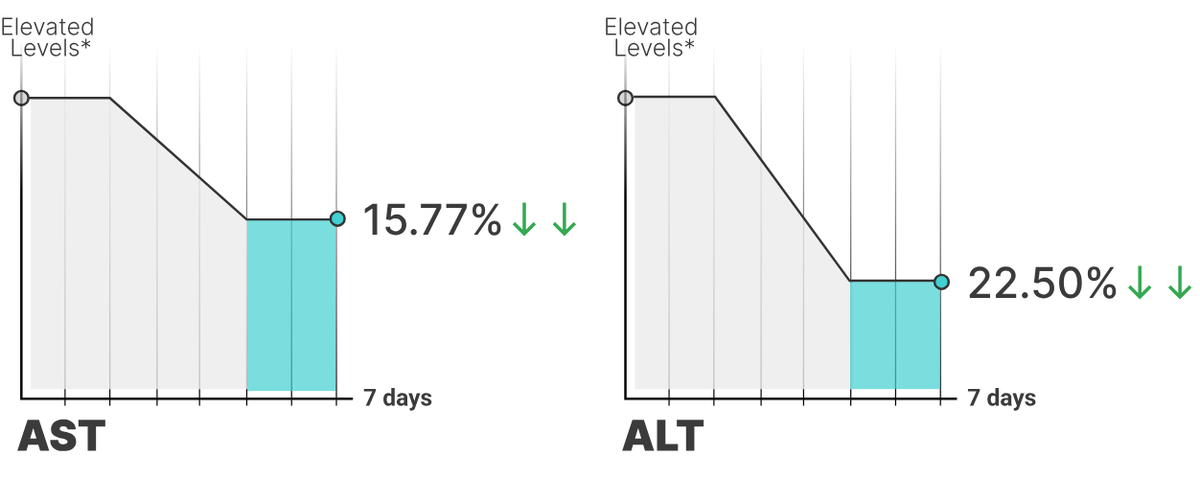
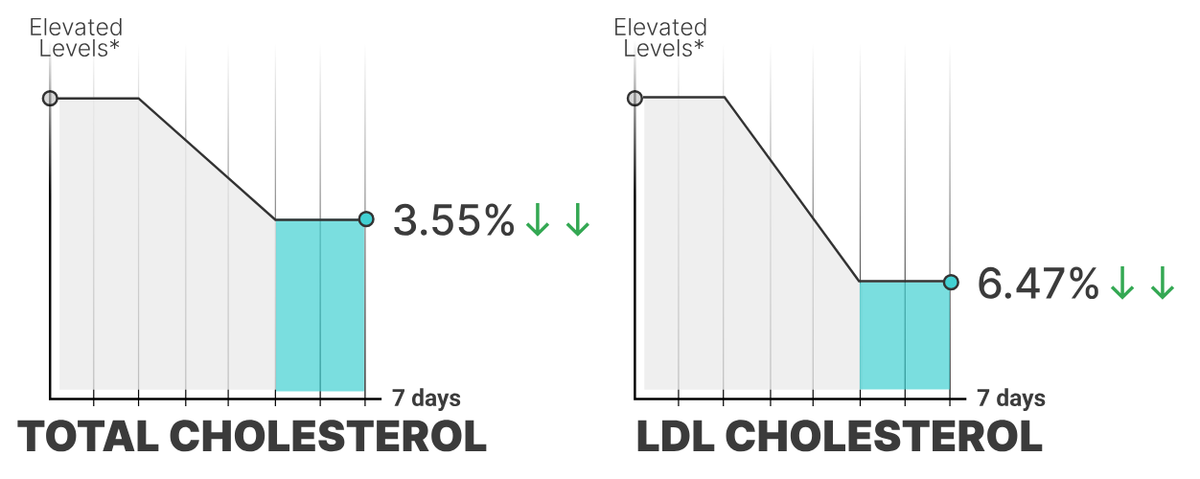
The study, charted
15 subjects · randomised crossover · MFDS approvedLiver enzymes
AST −15.77% and ALT −22.50% from elevated baseline. Normal range is ≤40 U/L.
Cholesterol
Total cholesterol −3.55% and LDL cholesterol −6.47% from elevated baseline.
How to read a supplement label
Six checks, in the order they are worth doing. The first three will eliminate most of what you are looking at.
1. Find the proprietary blend
If the panel lists a named blend with one total weight, you cannot know the dose of anything inside it. Blends are legal and sometimes defensible for genuinely proprietary formulation, but the burden is on the brand to disclose enough that you can evaluate it. Total herbal concentration per serving is the number to look for.
2. Check standardisation on every botanical
Raw herb weight and standardised extract are different units. A formula that standardises some ingredients and not others has usually spent its budget on the ones it names in the marketing.
3. Check the third-party testing
NSF, USP and Informed Choice all verify that what is on the label is in the bottle. Herbal supplements have a documented contamination and adulteration history; certification is not a luxury in this category.
4. Read the sweetener and calorie lines
A daily liver product carrying 20 g of added sugar is working against its own premise. Check the added-sugar line, not just the total.
5. Look for the FDA disclaimer
Structure/function claims legally require it. Its absence, next to bold benefit claims, means the brand is either careless about compliance or deliberately outside it.
6. Check the format against the routine
The best formula is the one you actually take. Capsules are cheap and shelf-stable but cap the amount of botanical material per serving. Liquids carry a far higher herbal load per dose and solve part of the absorption problem, at higher cost per serving.
Building a routine that holds
Supplements are the smallest lever here. Ranked by effect size, this is the honest order.
- Alcohol volume and pattern. Total weekly intake matters, and so does concentration — the same number of drinks spread across a week is metabolically different from all of them on Saturday. Consecutive alcohol-free days give the liver an uninterrupted window.
- Body composition. Excess visceral fat is the dominant modifiable risk factor for hepatic fat accumulation in most populations. Modest, sustained weight change moves this more than any supplement.
- Movement. Exercise affects hepatic fat independently of weight loss. Both resistance and aerobic work contribute.
- Coffee. Among the better-supported dietary associations in hepatology, with the caveat that observational data cannot establish causation.
- Sleep. The liver runs on a strong circadian rhythm; disrupted sleep measurably disturbs hepatic metabolism.
- Then, supplementation. A well-formulated daily product supports the machinery. It does not substitute for the five items above it.
Consistency beats intensity. A modest formula taken daily for six months will do more than an aggressive one taken for three weeks, because the mechanisms involved are cumulative and the markers you would measure move slowly.
Frequently Asked Questions
How long before a liver supplement does anything?
Enzyme markers respond slowly. Most clinical trials in this space run 8 to 12 weeks minimum, and the studies reporting shorter windows are typically measuring subjective symptoms rather than bloodwork. Give any formula a full quarter, and measure with a comprehensive metabolic panel rather than by feel.
Are liver cleanses and flushes worth doing?
No. The protocols circulating online — olive oil and citrus flushes in particular — have no supporting evidence, and the “stones” they produce have been analysed and found to be saponified oil rather than anything biliary. Your liver does not accumulate a backlog that needs flushing.
Can I take a liver supplement with medication?
Ask your physician. Milk thistle, curcumin and piperine all interact with cytochrome P450 enzymes, which is the same system that clears a large share of prescription drugs. This is one of the few genuine safety questions in the category and it deserves a real answer rather than a label disclaimer.
Capsule or liquid?
Liquid formats carry substantially more herbal material per serving and partly solve the solubility problem for poorly-absorbed compounds. Capsules are cheaper, more portable and shelf-stable. If cost per serving is the constraint, a well-standardised capsule taken daily beats a premium liquid taken occasionally.
Do I need one at all?
If you drink rarely, sleep well, move regularly and carry little visceral fat, the marginal value is small. The people who get the most from a daily formula are those with a real exposure load — regular social drinking, high-stress schedules, disrupted sleep — who are already doing the structural work and want support on top of it.
The bottom line
Liver support is a legitimate category with a serious marketing problem. The ingredients with the best human data — standardised silymarin, bioavailable curcuminoids, active-form B vitamins, and several botanicals from the Korean and Chinese herbal traditions — are supported by evidence for supporting normal hepatic function, and by nothing at all for the reset-your-body language wrapped around them.
Buy on disclosure: full dosing, standardised extracts, third-party testing, a stated total herbal concentration, and a brand that publishes its sample sizes next to its percentages. Then put the supplement where it belongs in the stack — underneath alcohol moderation, body composition, movement and sleep, supporting all four rather than standing in for any of them.
These statements have not been evaluated by the Food and Drug Administration. This product is not intended to diagnose, treat, cure or prevent any disease. This article is general information, not medical advice.
 NewsHow and When to Take a Liver Support Drink
 NewsWhat to Drink After a Meal to Help Digestion
 NewsFoods That Reduce Bloating, and the Ones That Cause It